Medical Outreach Program
Aryaman Singh, Eagle Scout
Total Volunteer Hours: 57.3
For my Eagle Scout project, I created and distributed child-friendly first aid kits to students at Oak Hill Elementary School. Each kit contained basic medical supplies such as bandages, gauze, alcohol prep pads, gloves, burn cream, and sanitizing wipes. I also designed a simple pamphlet that explained how to respond to common injuries like cuts, scrapes, burns, insect stings, and nosebleeds. The pamphlet included step-by-step instructions and illustrations so the information would be easy for elementary school students to understand.
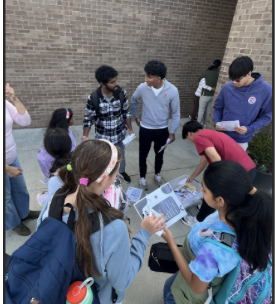
With the help of volunteers, we assembled the kits and distributed them directly to students. During distribution we also explained what each item in the kit was used for and how it could help treat small injuries. The goal of the project was to improve basic safety awareness and help students feel more confident about responding to minor injuries at home or at school.
Observations and Challenges
The distribution of the kits went very well. Many of the students were very excited to receive the kits, and they were very interested in learning about the items inside. It was surprisingly easy to explain the supplies and their uses to the students, and many of them asked thoughtful questions about how to treat different types of injuries. Seeing the students excited and engaged made the project feel very successful.
The biggest challenge was the assembly and distribution process taking longer than expected. I originally planned for it to take two days, but it ended up taking four days. At first we were assembling the kits one at a time, which made the process very slow. Some volunteers were also unsure about how many items should go in each kit or where they should be placed. Once I reorganized the process and clarified instructions, the assembly became much faster and more efficient.
Changes (from original proposal)
One change from the original proposal was that we did not end up creating the PSA video. Instead, we added more detailed information directly into the pamphlet so students could still learn how to use the items in the kits. This change simplified the project and allowed us to focus more on distributing the kits and explaining them directly to the students.
Leadership
I demonstrated leadership by planning the entire project, organizing volunteers, assigning tasks, and supervising both the assembly and distribution of the medical kits. I created a clear process for assembling the kits and explained the tasks to volunteers so everyone understood what to do. When issues came up, such as confusion about how many materials went into each kit or how the kits should be assembled, I stepped in to clarify instructions and reorganize the workflow so the project could move more efficiently. I also created a script for volunteers to use while explaining the kits to the students so that everyone communicated the same information clearly.
One of the most difficult parts of the project happened before the project even started. It was very challenging to find a beneficiary for the project. I had discussions with three different potential beneficiaries over several months. At one point, I had nearly finalized the project with the Chantilly Regional Library, but they ultimately had to back out. This delayed my project by several months and required me to restart the process of finding a new beneficiary. It was frustrating, but it taught me the importance of persistence and flexibility. During the project itself, the most difficult part was coordinating volunteers and making sure everyone understood the assembly process. At first, volunteers were packing the kits one at a time and some were unsure about how many items should go into each kit. This slowed the process down. I had to step in, reorganize the workflow, and clearly explain the process so the group could work more efficiently.
The most rewarding part of the project was seeing the reaction of the students when they received the kits. Many of the students were very excited and curious about the items in the kits. It was also rewarding to see how quickly they were able to understand what the supplies were used for. Knowing that the kits could help students and families better respond to small injuries made the project feel meaningful and worthwhile. It was also rewarding to see the volunteers work together successfully to complete the project.
This project helped me learn that leadership requires patience, communication, and persistence. One of the biggest lessons I learned was that projects do not always go exactly as planned. Finding a beneficiary was much more difficult than I expected, and when the Chantilly Regional Library had to back out, it delayed my project for several months. I had to stay persistent and continue reaching out to other organizations until I found the right opportunity. I also learned that clear communication is very important when leading a group. When volunteers were unsure about the assembly process, the work slowed down. Once I clearly explained the steps and reorganized the workflow, the project moved much more smoothly. This experience helped me improve my ability to guide a group, solve problems, and adapt when challenges came up.


Preparing the medical kits


Delivering the kits