Siddharth Pubbaraju, Eagle Scout
Total Volunteer Hours: 317.5
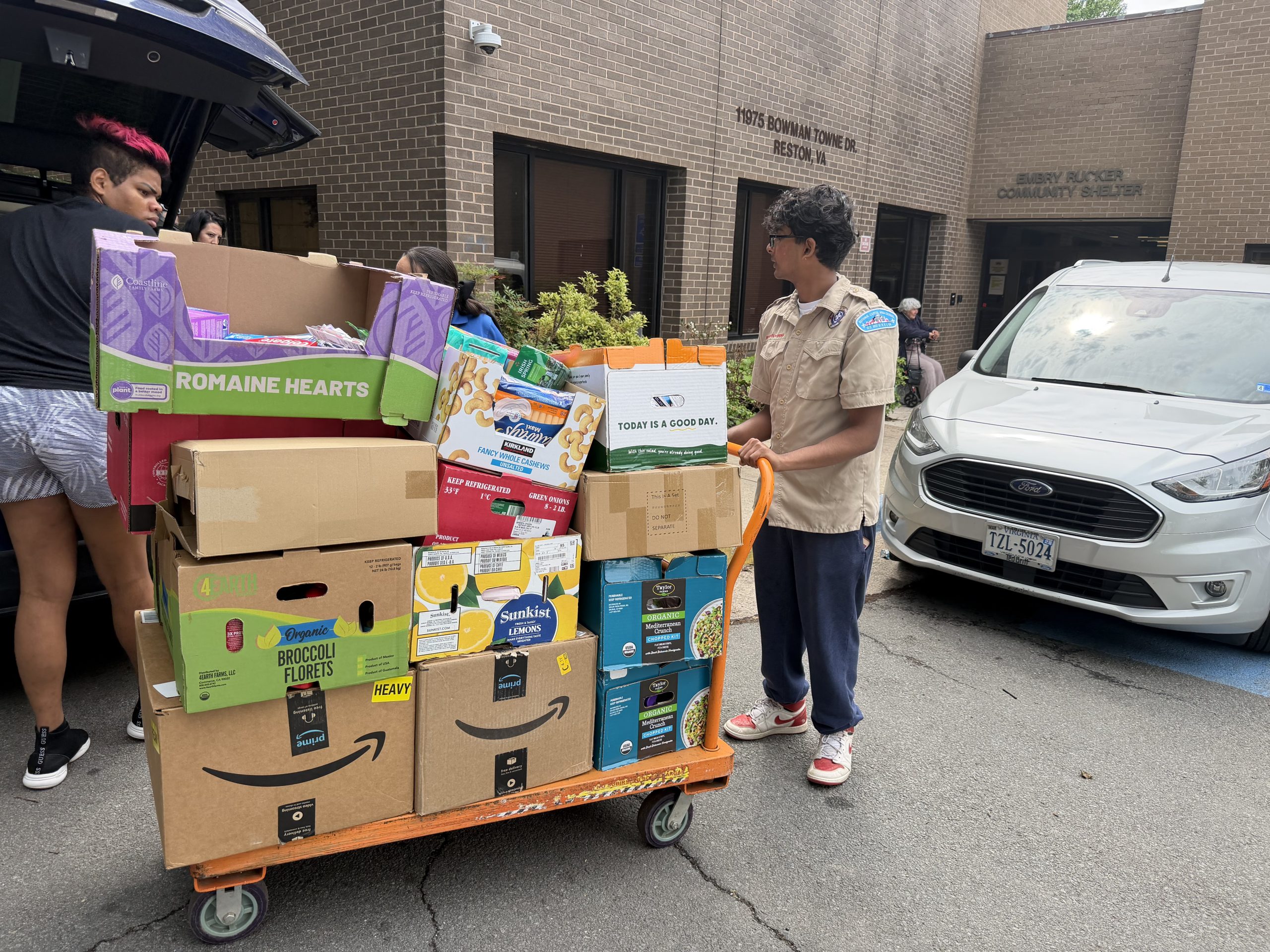
I am grateful for the opportunity to serve my community through Embry Rucker Community Shelter. While looking for community service projects, I discovered that shelters struggle to keep up with the demand for basic hygiene care supplies, so I wanted to help fill that gap. Helping solve the demand for basic hygiene care supplies allowed me to make a direct, local impact while showing care for my community. I was also able to support local vulnerable populations. Hygiene kits are especially valuable for people experiencing homelessness, disaster survivors, or those in transitional housing. I mapped typically high potential neighborhoods—Herndon, Fairfax and areas behind navy elementary and Franklin Middle School—which
despite greater walking distance between homes, proved to be generous and impactful donor communities. Through my project, I was also promoting public health. Access to basic hygiene items like soap, toothpaste, and sanitary products helps prevent illness and improves overall.
Observations and Challenges
The project was successful due to clear planning, efficient execution, strong volunteer support, community engagement, and effective fundraising. Route maps helped volunteers navigate smoothly and stay organized, while assigning longer routes to older Scouts and shorter routes to younger Scouts made the distribution process more efficient. Although there was room for minor improvements, the overall system worked well. Phase 1, flyer distribution, was completed ahead of schedule thanks to careful planning, guidance from Scoutmasters, and strong volunteer participation. Scouts, adults, and other volunteers contributed by stapling flyers, driving routes, collecting donations, sorting items, and making deliveries, which helped each phase run smoothly. The surrounding neighborhoods also responded generously, allowing the project to approach its donation target and demonstrating strong community engagement. In addition, I successfully raised funds through contributions from family and friends and secured generous donations from local Dunkin’, Giant, and Safeway stores.
Coordinating a large team of Scouts, drivers, and other volunteers presented several challenges and gave me valuable experience managing people in real time. Initially, I grouped younger Scouts together because they wanted to travel on the same routes, but I quickly realized that they took longer than expected without guidance from older Scouts who had previous experience with similar activities. Recruiting enough volunteers was also challenging, so I reached beyond the troop to classmates, family friends, and community members to secure enough help for both project days. Fundraising from local businesses was another difficulty, as most of the stores I contacted—including LIDL, Costco, Target, Domino’s, Papa Johns, MOD Pizza, and Office Depot—declined my requests, even after I contacted multiple locations. Despite these setbacks, I continued reaching out and was ultimately able to secure donations from Dunkin’ and Giant.
Changes (from original proposal)
During the project, I made several adjustments to my original plan to better meet the project’s needs. I initially planned to reach 500 homes, but at the request of my Scoutmasters, I increased the total to approximately 1,200 homes to provide greater coverage and increase community participation. I also expanded my volunteer pool beyond Scouts by inviting classmates, family friends, and other community members. Although recruiting outside the troop was included in my proposal, I ultimately had to contact more people than expected to meet staffing needs. Another change involved the delivery schedule. I had originally planned to deliver the collected donations during the weekend, but because the beneficiary was not available until the following Wednesday, I adjusted the schedule and delivered everything then. Finally, the project itself was originally planned for an earlier date, but delays involving paperwork and scheduling required me to revise the timeline after meeting with my district Eagle representative.
Leadership
The most difficult part of being a leader was learning to step back and supervise rather than trying to do everything myself. I am used to being hands-on, so it was challenging to delegate responsibilities and trust volunteers to complete their assigned tasks. Managing a large group of Scouts, adults, and other volunteers was also difficult, especially when several people needed directions or had questions at the same time. This experience pushed me to remain calm under pressure, communicate instructions clearly, and focus on the overall progress of the project instead of becoming too involved in individual tasks.
The most rewarding part of being a leader was seeing all of the planning and coordination come together successfully. I coordinated more than 30 volunteers throughout the project and ultimately saw the collected hygiene products delivered to the beneficiary. Knowing that the donations would directly support families in need made all of the work worthwhile. It was especially rewarding to see volunteers working together and to know that I had successfully led a large project from the initial planning stages through its completion.
Before my Eagle project, I had already held several leadership positions in Scouting and other organizations, including serving as an instructor, troop guide, and patrol leader during campouts, meetings, and other activities. However, my Eagle project taught me how important advance planning, organization, delegation, and logistics are when leading a project of this size. I learned how to coordinate with organizations, establish timelines, recruit volunteers, plan routes, and assign responsibilities based on volunteers’ strengths and experience. I also learned the importance of persistence, particularly while requesting donations from businesses, since I was frequently turned away or had to return because a manager was unavailable. Most importantly, the project strengthened my ability to delegate responsibilities, adapt when plans changed, and lead a large group toward a common goal.


Project work days + completion